
Protect the operation below
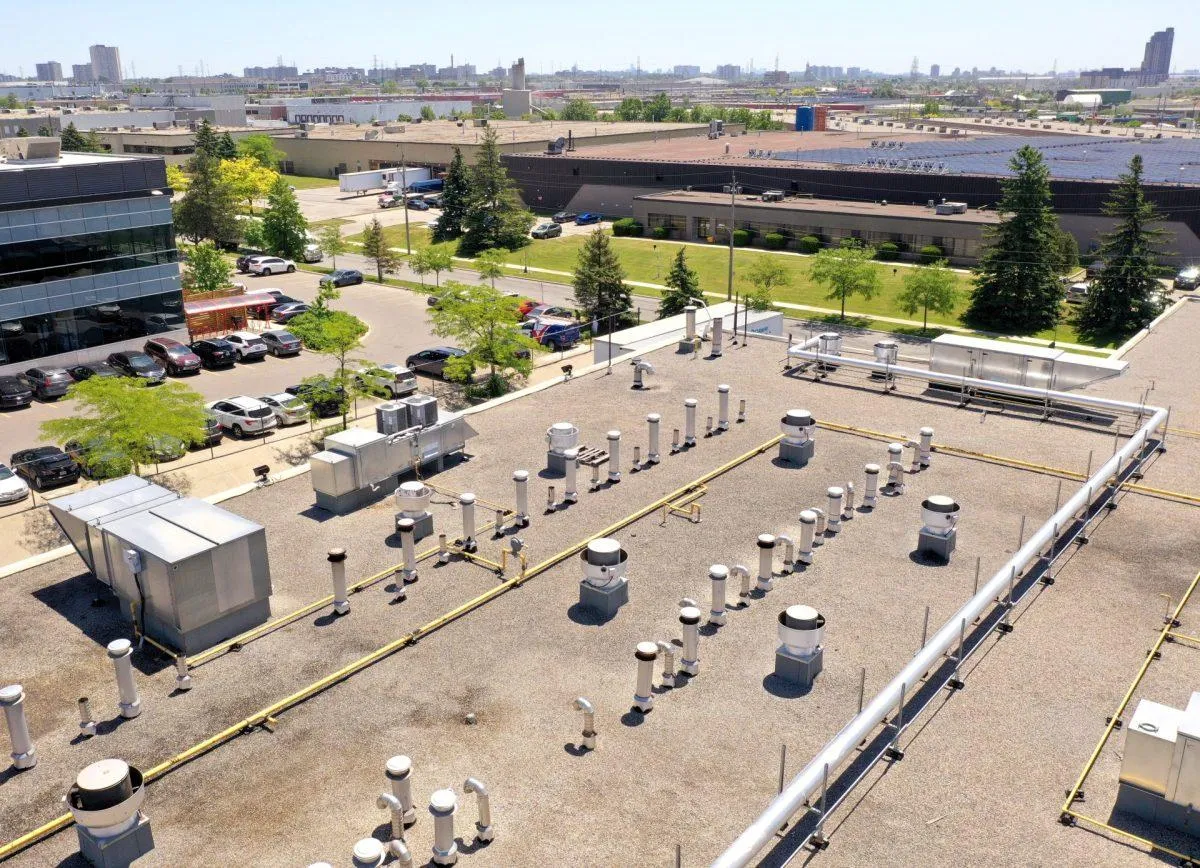
On a food plant a roof leak does not start as a building problem. It starts as a quality-assurance problem. Water over an active line means a product hold, an investigation and documentation the QA manager has to defend, and in a Jackson summer the humidity inside these buildings makes the roof assembly work hard even when the sky is clear. We approach processing-plant roofs to remove that risk before it shows up not to chase it after a storm puts a stain over the packaging room.
Food and beverage processing here clusters where rail, interstate and industrial land come together: the I-20 industrial corridor running west toward Clinton and east toward Pearl, the US-49 manufacturing belt down through Richland and Florence and the warehouse-and-plant districts off I-55 and I-220 north of downtown. These are bakeries, beverage and bottling operations, protein and prepared-food plants and cold-storage distributors and almost all of them share two roof realities: constant interior moisture from washdown sanitation and heavy rooftop refrigeration. Both shape the system we put on them.
Sanitation crews hose down a processing floor on a schedule and that water becomes vapor that rises straight into the roof assembly. Combined with Mississippi's outdoor humidity that interior moisture load creates a strong vapor drive toward the deck for much of the year. Without a competent vapor retarder and the right insulation strategy that vapor condenses inside the assembly, corrodes the steel deck and rots insulation while the membrane above still looks fine. We design the vapor side of the roof deliberately on washdown buildings because the failure that matters here is usually invisible from the top.
A food plant cannot use whatever single-ply is on the truck. USDA, FDA and state food-safety rules govern what can go above a production or food-contact zone and that review reaches past the membrane to the adhesives, primers and sealants in the flashing details, many of which carry solvents that are not acceptable in a food environment. We confirm material acceptability with the plant's QA team before specifying.
Freezer rooms, chill rooms and sandblast-freeze areas put two demands on the roof at once. The assembly above them has to hold thermal and vapor continuity so the cold chain does not pull condensation into the deck and the rooftop carries the deadweight of condensing units, evaporative equipment and the structure that supports them. Ponding water over a freezer is doubly bad: it loads the refrigeration system thermally and it accelerates deck corrosion. We use tapered insulation to drive water to scuppers or interior drains at the low point of each bay and design the cold-side assembly around the actual operating temperatures.
A food plant's roof is one of the busiest decks in commercial real estate. Refrigeration techs, sanitation contractors and maintenance crews are up there constantly servicing condensers, evaporators, exhaust fans and the lines that run between them and all that foot and cart traffic wears a membrane out faster than weather alone ever would. We protect the assembly with reinforced walkway pads along the real travel routes between equipment, specify a thicker membrane in high-traffic zones and lay out the pads to match how the service crews actually move not a tidy diagram. On a plant where the roof gets walked daily that traffic protection is often what decides whether the system reaches its rated life.
Heavy Jackson thunderstorms drop a lot of water fast and a processing-plant roof cannot let that water sit. Ponding over a production line is a leak risk and a contamination risk and ponding over refrigerated space adds thermal load on top of that. We size and clear both primary and overflow drainage, add tapered insulation on reroofs to drive water off the deck instead of letting it pool in the low spots these flat roofs develop and keep the drain and scupper layout matched to the equipment loads above. Decisive drainage is cheap insurance against the kind of leak that turns into a product hold.
Most Jackson plants run two or three shifts with a weekly sanitation window as the only time the floor is down. Any work that opens the envelope over an active area happens in that window after the floor is confirmed clean and protected with the production and QA leads. We phase the roof around the production calendar, keep a 24-hour line open for emergencies and provide the condition documentation QA needs for a USDA or FDA walk.
Keep exploring
Industrial Flex Space Roofing
Roofing for multi-tenant industrial flex buildings in Jackson, MS. Penetration-heavy low-slope decks, undocumented
Stadium Arena Roofing
Commercial roofing for stadium & arena roofing in Jackson, MS — specifications, scheduling, and project coordination
Casino Entertainment Roofing
Commercial roofing for casino & entertainment complex roofing in Jackson, MS — specifications, scheduling, and project