
Hail damage on a flat roof isn't always obvious from the ground

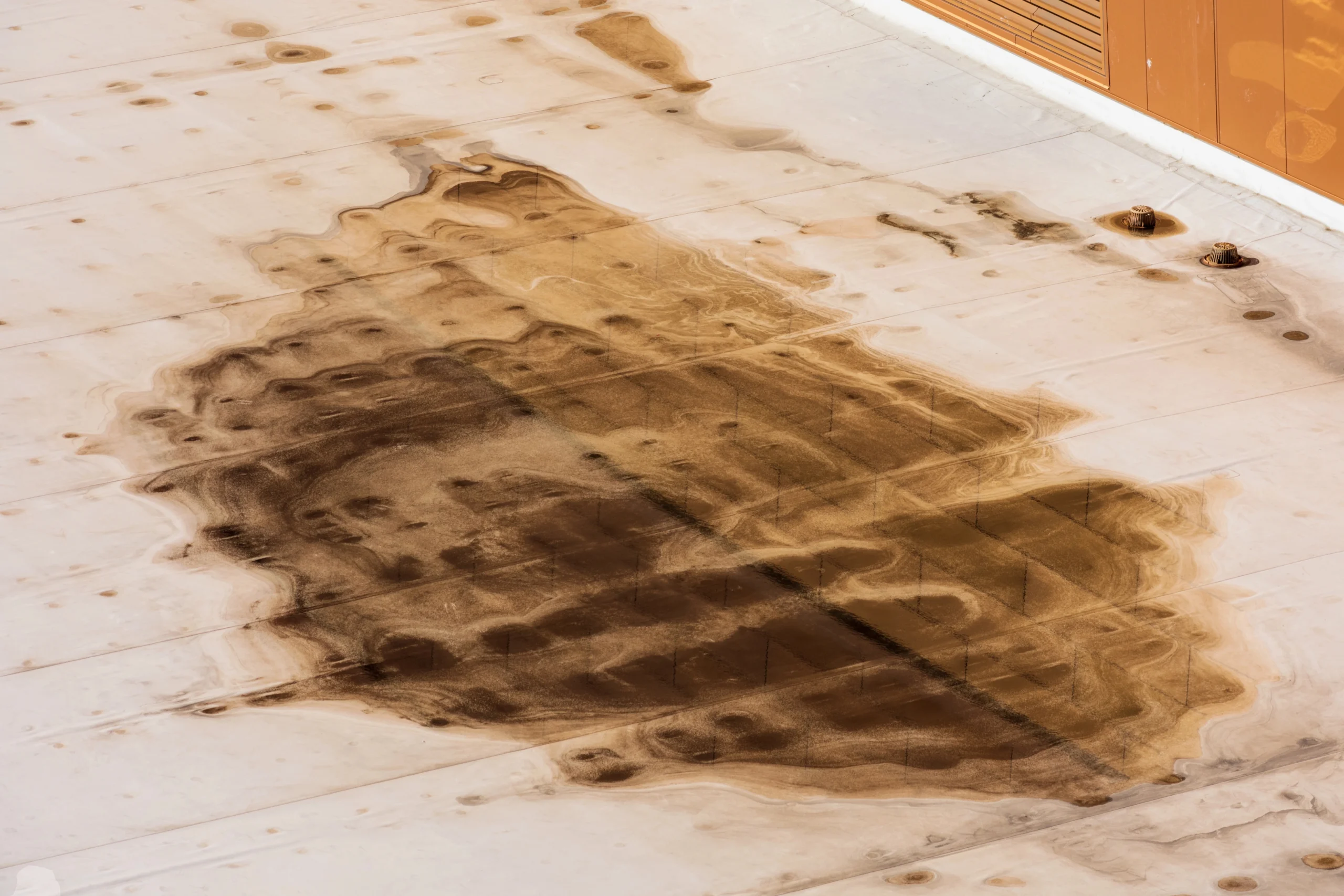
Jackson and the surrounding metro sit inside a stretch of the country where spring and early-summer severe thunderstorms regularly bring hail along with heavy rain and gusty wind. Most of that hail is small enough that a car in the parking lot shows more visible damage than the roof does, which is part of the problem: a low-slope commercial roof can take a real hit without a single obvious hole in it. Bruised insulation board under an intact membrane, dimpled EPDM, cracked or split pipe boots, and dented edge metal or rooftop equipment covers are the marks we're actually looking for.
The roof stock around the metro affects how hail shows up. Older EPDM and built-up roofs on downtown and institutional buildings near Capitol Street can hide bruising under a surface that still looks intact. Newer TPO fields on retail and warehouse roofs in Rankin and Madison County tend to show granule and seam-level marks more clearly, but wide-open fields also mean more area to check. A warehouse roof along I-20 with rooftop units and a lot of penetrations needs a different inspection pattern than a retail strip with a simple gable field.
We walk the whole roof plane by plane after a reported hail event, checking membrane, flashing, curbs, drains, and any rooftop equipment for impact marks, including the areas farthest from the roof access point.
Testing matters as much as looking. A hail mark that's purely cosmetic — surface granule displacement that hasn't broken the membrane's waterproofing — is treated differently from a mark where the membrane or the board underneath has actually been compromised. We probe suspect areas, check for soft spots that suggest wet insulation, and note the difference clearly so the scope isn't inflated with cosmetic items or, just as much a problem, missing something that will leak the next time it rains.
Timing affects the documentation too. Central Mississippi hail events often arrive in the same storm system as heavy rain and straight-line wind, so a roof walk that happens right after the event can separate hail-specific damage — bruising, dimpling, granule loss, cracked boots — from wind-driven damage like lifted seams or displaced coping that a follow-up storm can add on top of it. Waiting longer makes that separation harder and gives water more time to find its way through a compromised spot.
For a claim, the documentation looks the same as any other insurance-related roof scope: overview photos, close-up photos of every hail mark, measured extent of the affected area, and notes on anything else on the roof that could be confused with hail damage, like age-related cracking or old repair patches. We're your roofing contractor, not a public adjuster — we document and substantiate the roof damage so you and your adjuster work from an accurate scope, and we're available to walk the roof with the adjuster and point out marks that are easy to miss from a quick pass.
Once the scope is agreed, repair or restoration work on hail damage usually means replacing bruised insulation board, resealing or patching affected membrane sections, and replacing dented edge metal, coping, or equipment covers. Where the damage is widespread across an older roof that was already close to the end of its service life, restoration or full replacement becomes the more practical option, and we lay out that comparison plainly instead of defaulting to the largest scope.
Questions Jackson building owners ask
What does hail damage actually look like on a flat commercial roof?
On single-ply membranes it can be subtle: bruising or dimpling in the membrane and the insulation board underneath, granule loss on modified bitumen or coated surfaces, split or cracked pipe boots, and dented edge metal, coping, and rooftop equipment housings. None of that is always visible from a ladder at the edge of the roof, which is why we walk the field itself.
How soon after a hail storm should the roof be checked?
Sooner is better, mainly so the damage gets documented before more weather moves through or before a small split in the membrane turns into an active leak. Central Mississippi hail often arrives with the same storm system as heavy rain and wind, so a delayed inspection can make it harder to separate hail damage from wind or rain-driven damage that happened afterward.
Does every hail mark mean the membrane needs to be replaced?
No. Cosmetic granule loss on a surface that still holds its integrity is different from bruising that's compromised the membrane or the board underneath. We test suspect areas and note which marks are cosmetic and which ones affect the roof's performance, so the scope reflects the actual condition rather than every visible mark.
Can hail damage be hidden under existing patches or coatings?
Yes, and that's one reason a hail inspection takes time on an older roof. A prior patch or a roof coating can mask bruising or splitting underneath. We check known repair areas and coated sections as part of the same roof walk instead of assuming they're unaffected.
Do you help document hail damage for an insurance claim?
We document the roof — photos, measurements, and notes on where the hail damage sits relative to drains, curbs, and equipment — and put together a repair or replacement scope. We're your roofing contractor, not a public adjuster, so filing the claim and working out the settlement amount stay with the building owner and their carrier.
Keep exploring

Commercial Roof Insurance Claims
The full insurance-claim documentation and scope process for Jackson commercial roofs.
Wind & Storm Damage Roof Insurance Claims
Wind and severe-storm damage assessment for insurance-related roof scopes.
Hail Damage Roof Restoration
Repair and restoration work for hail-damaged commercial roof membranes.