
Wind damage concentrates at edges, corners, and seams
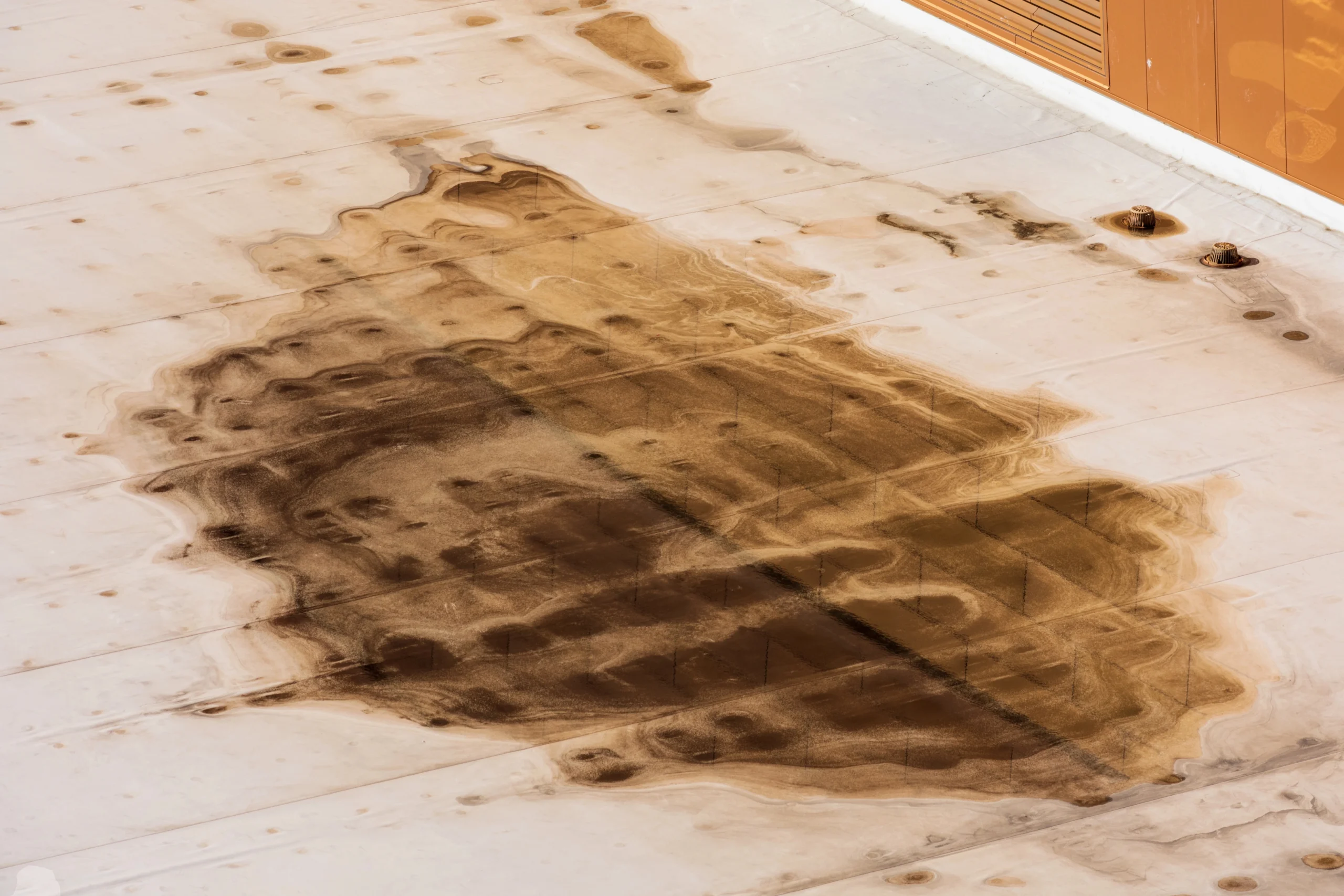
The Jackson metro sits in a part of central Mississippi that sees severe thunderstorms through spring and summer, some of them tornado-warned, bringing straight-line wind gusts that put real uplift pressure on a low-slope commercial roof. That pressure concentrates hardest at roof edges, corners, and parapets, so a wind inspection starts there: coping that's shifted or come loose, edge metal that's been pried up, membrane that's lifted or torn along a perimeter fastening row, and any rooftop equipment that's been rocked or displaced.
Field seams matter too, even away from the edges. A TPO or PVC seam that's been stressed by wind uplift can lift, re-settle, and look intact from above while the weld or seal underneath is compromised. We check representative seam runs across the whole field, since a wind event doesn't always leave its worst damage where it's easiest to see.
Building type affects what we're checking for. Government and institutional roofs near the Capitol Street area often carry older mechanically-fastened systems where wind uplift shows up as pulled fasteners and lifted membrane. Warehouse and distribution roofs along I-20 and I-55 tend to have wide open fields and more rooftop equipment, so displaced curbs and equipment covers become part of the wind-damage picture. Medical buildings around the UMMC and Fondren corridor often need occupied-building access planning worked into the same inspection.
Jackson is far enough inland that direct hurricane-force wind isn't a factor, but the remnants of a Gulf storm can still track through central Mississippi with sustained rain and gusty wind well after landfall. That combination doesn't usually tear a healthy roof apart, but it finds the weak points — a marginal drain, a loose piece of coping, a seam that was already due for maintenance — and turns them into an active leak. We treat those events with the same documentation standard as a direct thunderstorm: photos, measurements, and notes on what changed.
Debris is part of the wind picture as well. Loose material, tree limbs, and equipment blown across a roof during a storm can puncture membrane or dent metal in spots that have nothing to do with uplift pressure. We separate debris-caused damage from wind-uplift damage in our notes, since they can call for different repair approaches even though they came from the same event.
Documentation for a wind or storm claim follows the same standard we use across every insurance-related roof scope: overview photos of each roof plane, close-up photos of every point of damage, measured extent of affected membrane and edge metal, and notes on drains, curbs, and equipment tied to the same event. We're your roofing contractor, not a public adjuster — we document and substantiate the roof damage so you and your adjuster work from an accurate scope, and we're available to walk the roof with the adjuster to point out edge and seam damage that's easy to miss from a ground-level look.
Repair scopes for wind damage usually center on re-securing or replacing edge metal and coping, resealing or replacing lifted membrane sections, and re-fastening or re-welding affected seams. Where wind uplift has affected a wide area on a roof that was already near the end of its service life, we lay out replacement as an option alongside repair, with the reasoning behind each one, rather than assuming the larger scope by default.
Questions Jackson building owners ask
What kind of wind damage shows up on Jackson commercial roofs?
Lifted or torn membrane at the perimeter, displaced coping and edge metal, pulled fasteners along a parapet, and debris punctures from limbs or loose material blown across the roof are the most common patterns. Straight-line wind from a severe thunderstorm tends to concentrate damage at edges and corners, where uplift pressure is highest.
Do tornado-warned storms cause different damage than a regular thunderstorm?
The mechanism is similar — wind uplift at roof edges and corners — but a tornado-warned storm can produce more concentrated, higher-force damage over a smaller area, along with more windborne debris. We check the whole roof either way, since damage from a fast-moving storm isn't always where the worst wind was reported.
Does a Gulf hurricane affect a roof this far inland?
Jackson doesn't see hurricane-force wind, but the remnants of a Gulf storm can still bring heavy, sustained rain and gusty wind well inland. On a roof with existing wear — an aging membrane, a marginal drain, a loose piece of edge metal — that combination can turn into wind-driven leaks even without a direct hurricane hit.
How is wind damage documented for an insurance claim?
We walk the roof and photograph lifted or torn membrane, displaced edge metal and coping, pulled fasteners, and any debris damage, along with measurements of the affected area. Wind damage can also be less visible than it looks — a seam that's lifted and re-settled can leak without an obvious tear — so we check field seams as well as the edges.
Can wind damage be repaired without a full roof replacement?
Often, yes, particularly when the damage is limited to the perimeter — edge metal, coping, and a section of membrane — and the rest of the field is in reasonable condition. Where wind has pulled fasteners across a wide area or the membrane was already near the end of its service life, replacement becomes the more realistic option, and we explain the reasoning before recommending it.
Keep exploring

Commercial Roof Insurance Claims
The full insurance-claim documentation and scope process for Jackson commercial roofs.
Hail Damage Roof Insurance Claims
Hail-specific damage documentation and claim scope work for Jackson commercial roofs.
Storm Damage Roof Repair
Repair work for wind and storm-damaged commercial roof systems.