
Document the roof before choosing the scope
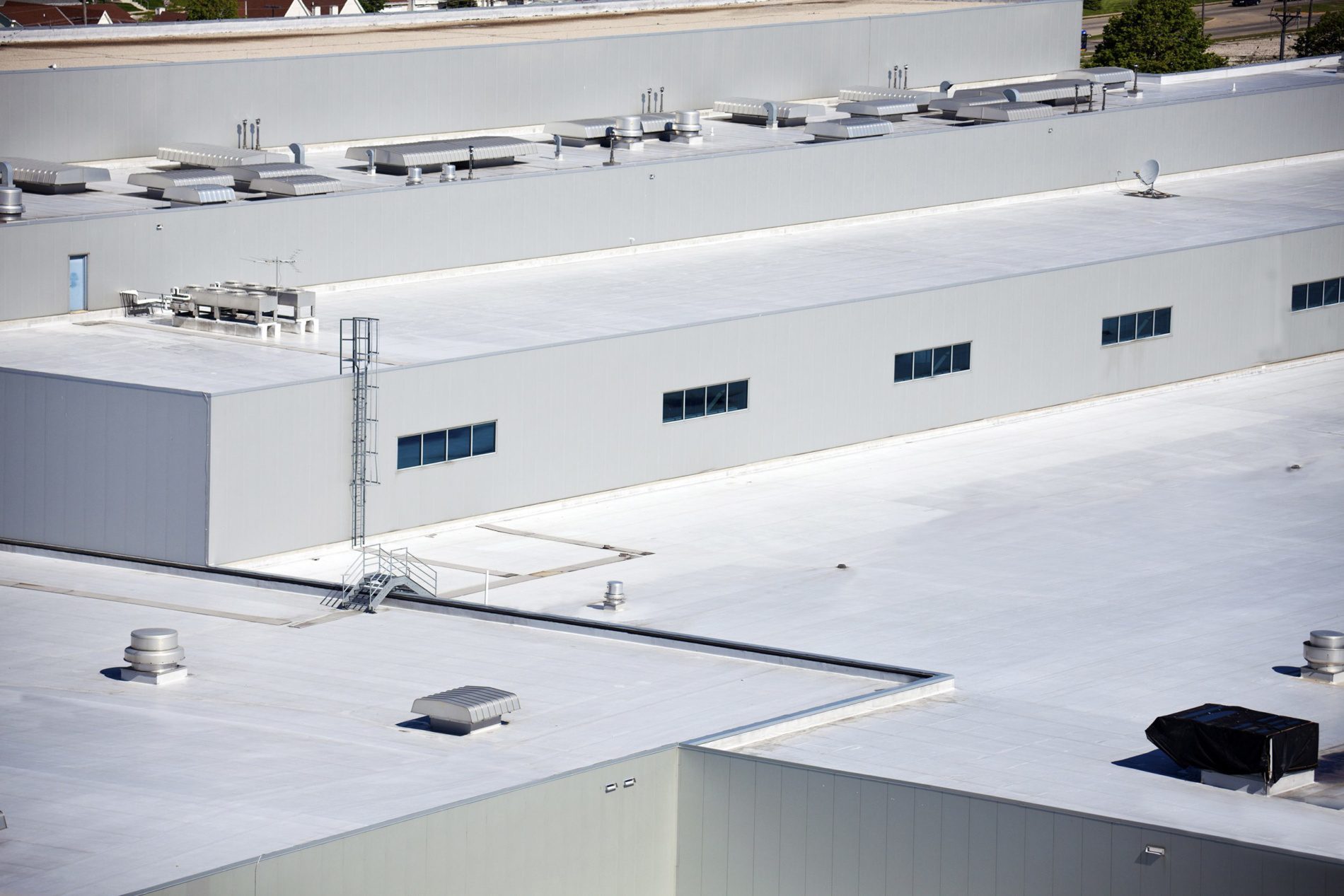
Peavey Electronics, which manufactured amplifiers and audio equipment in Meridian and whose supply chain touched Jackson-area facilities represents the kind of precision electronics manufacturing that has historically defined industrial roofing complexity in central Mississippi. Today Jackson's manufacturing sector includes Viking Range (now part of Middleby Corporation) operations in the region food processing facilities tied to the Mississippi Delta agricultural economy and a network of metal fabrication and industrial services companies whose collective roofing requirements span the full range of industrial challenges. A commercial roofing contractor serving Jackson manufacturers must understand the specific demands of each facility type rather than applying a one-size approach to the market.
Process equipment integration on Jackson manufacturing roofs reflects the city's industrial mix. Food processing facilities operated by companies with ties to the Mississippi agricultural economy carry grain elevator ventilation systems ammonia refrigeration condenser units and process exhaust stacks that impose both chemical and physical challenges on the roofing assembly. Metal fabrication facilities carry welding exhaust stacks laser cutting ventilation units and paint booth exhausts. Each equipment type requires a specific curb and flashing detail and the contractor's pre-project assessment must inventory every penetration individually rather than relying on generalized standard details.
Chemical fume exposure on Jackson industrial roofs varies by facility type. Ammonia refrigeration systems—common in cold storage and food processing operations in Mississippi—produce exhaust that is highly aggressive to roofing materials. A membrane exposed to concentrated ammonia refrigerant vapor over an extended period will degrade far more quickly than one in a non-refrigerant environment. The contractor must identify all refrigeration system exhaust locations confirm that the proposed membrane material has documented resistance to ammonia vapor and specify appropriate flashing compounds at every refrigeration system penetration.
Vibration management at Jackson manufacturing facilities depends on the production equipment profile of the specific plant. Metal fabrication operations with plasma cutting tables press brakes and rolling equipment produce moderate continuous vibration that can accelerate fatigue at mechanically fastened membrane seams. The contractor should assess the vibration environment during the pre-project site visit and recommend a membrane attachment system that is appropriate for the measured or estimated vibration level. For facilities where production equipment is likely to change over time, designing for a higher vibration tolerance than currently observed provides a useful safety margin.
Skylight management on Jackson manufacturing roofs must account for Mississippi's extreme summer heat and humidity. Skylights that admit direct sunlight into a production area without adequate shading or diffusion can create heat gain problems that offset the energy savings from daylighting. When skylight replacement is part of a re-roof scope in Jackson the contractor should recommend translucent domes with appropriate shading coefficients for the Mississippi climate balancing daylighting benefit against solar heat gain. Mississippi's energy code requirements for fenestration should be used as a minimum baseline with facility-specific comfort and productivity considerations layered on top.
Roof drain management in Jackson must account for the city's significant rainfall which averages over 50 inches annually. Jackson's manufacturing roofs many of which are large flat or low-slope assemblies can accumulate significant water loads if drains are undersized clogged or positioned in areas where the roof slope is insufficient to drive drainage. The contractor's drainage assessment should include a hydraulic capacity calculation for every drain relative to its tributary area and the 100-year rainfall intensity for Jackson as published by the National Weather Service. Any drain found to be inadequate for its tributary area should be resized or supplemented with an overflow drain as part of the re-roof scope.
Production schedule coordination in Jackson's manufacturing sector is generally more flexible than in tier-one automotive or aerospace facilities but it still requires meaningful pre-project planning. Food processing facilities that operate on seasonal harvest cycles particularly those processing sweet potatoes catfish or other Mississippi agricultural products have defined busy seasons when roofing work is not practical. The contractor should confirm the facility's production calendar during pre-project meetings and develop a phasing plan that positions the heaviest construction activity in the facility's off-peak period.
Mississippi's building permit and inspection process for commercial roofing varies by jurisdiction and Jackson's permit office has specific requirements for contractor licensing and insurance documentation. Commercial roofing contractors working in Jackson must hold a valid Mississippi State Board of Contractors license at the appropriate category carry general liability and workers' compensation insurance at the limits required by the facility's insurance certificate requirements and submit a complete permit application with manufacturer-specified installation documentation before work begins.
Jackson's commercial roofing market is served by a mix of local contractors with deep community ties and regional contractors based in Memphis New Orleans or Birmingham who work in the Mississippi market. For complex manufacturing re-roofs the facility manager should evaluate contractors based on specific industrial experience rather than company size or geographic base. A local contractor with documented experience on comparable Jackson manufacturing facilities may outperform a larger regional firm with a generic industrial portfolio.
Keep exploring
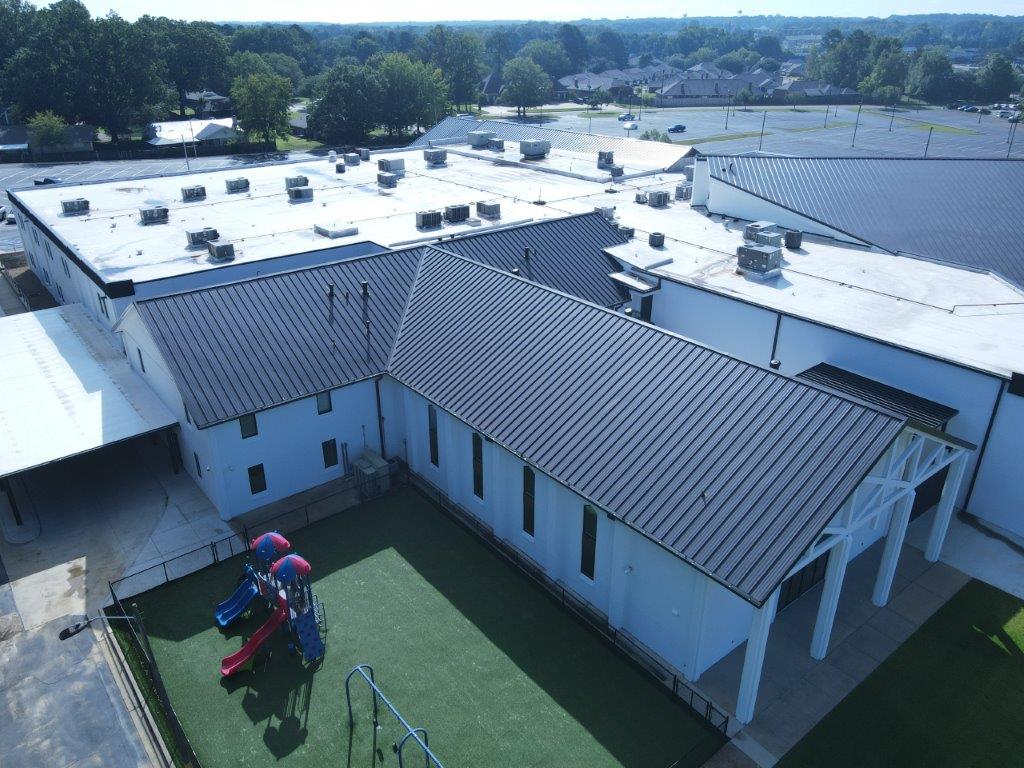
Church Roofing
Commercial roofing for churches, worship centers, and religious facilities throughout Jackson,
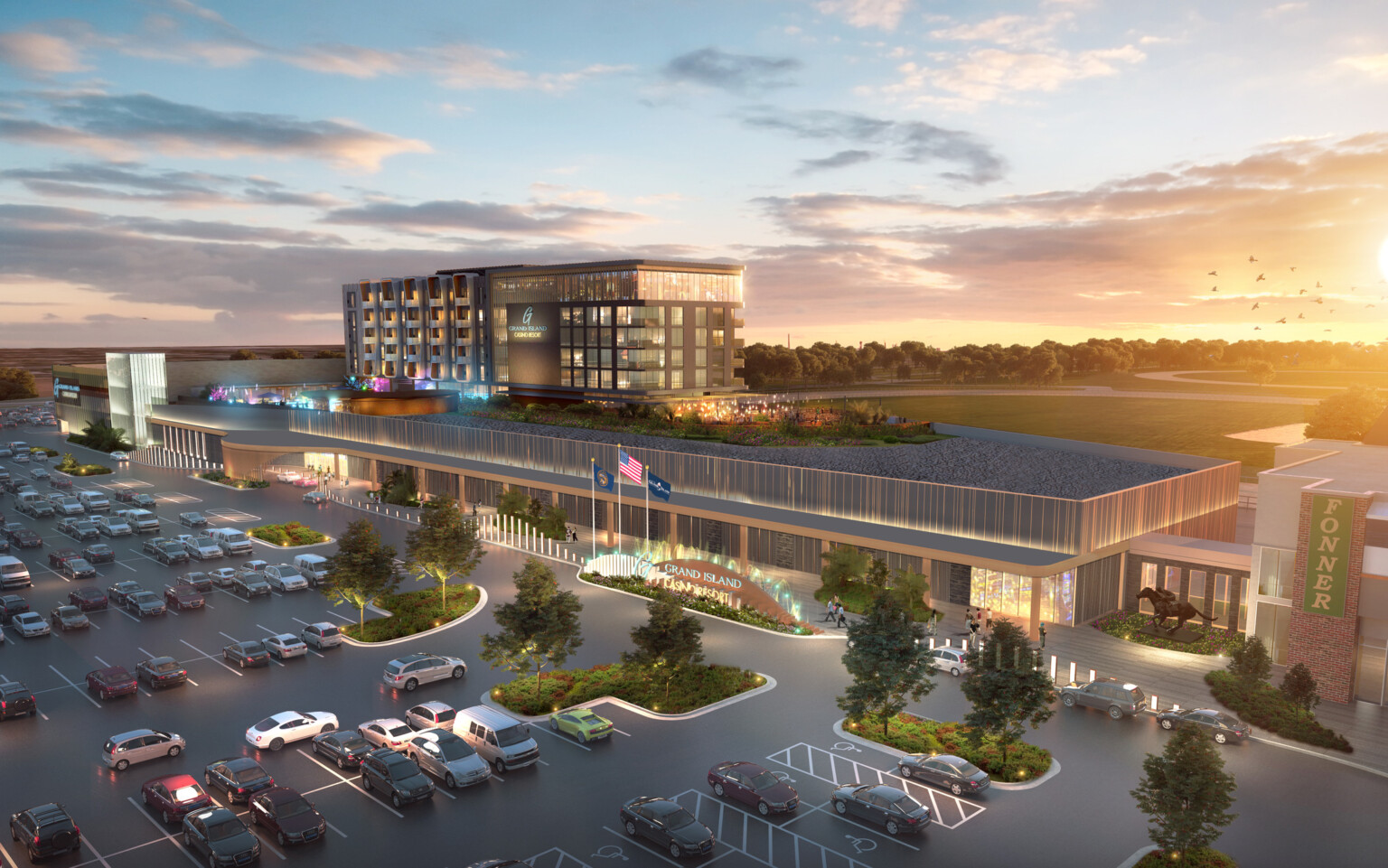
Hotel Roofing
Commercial roofing for full-service hotels, limited-service hotels, extended-stay properties, and hospitality brands
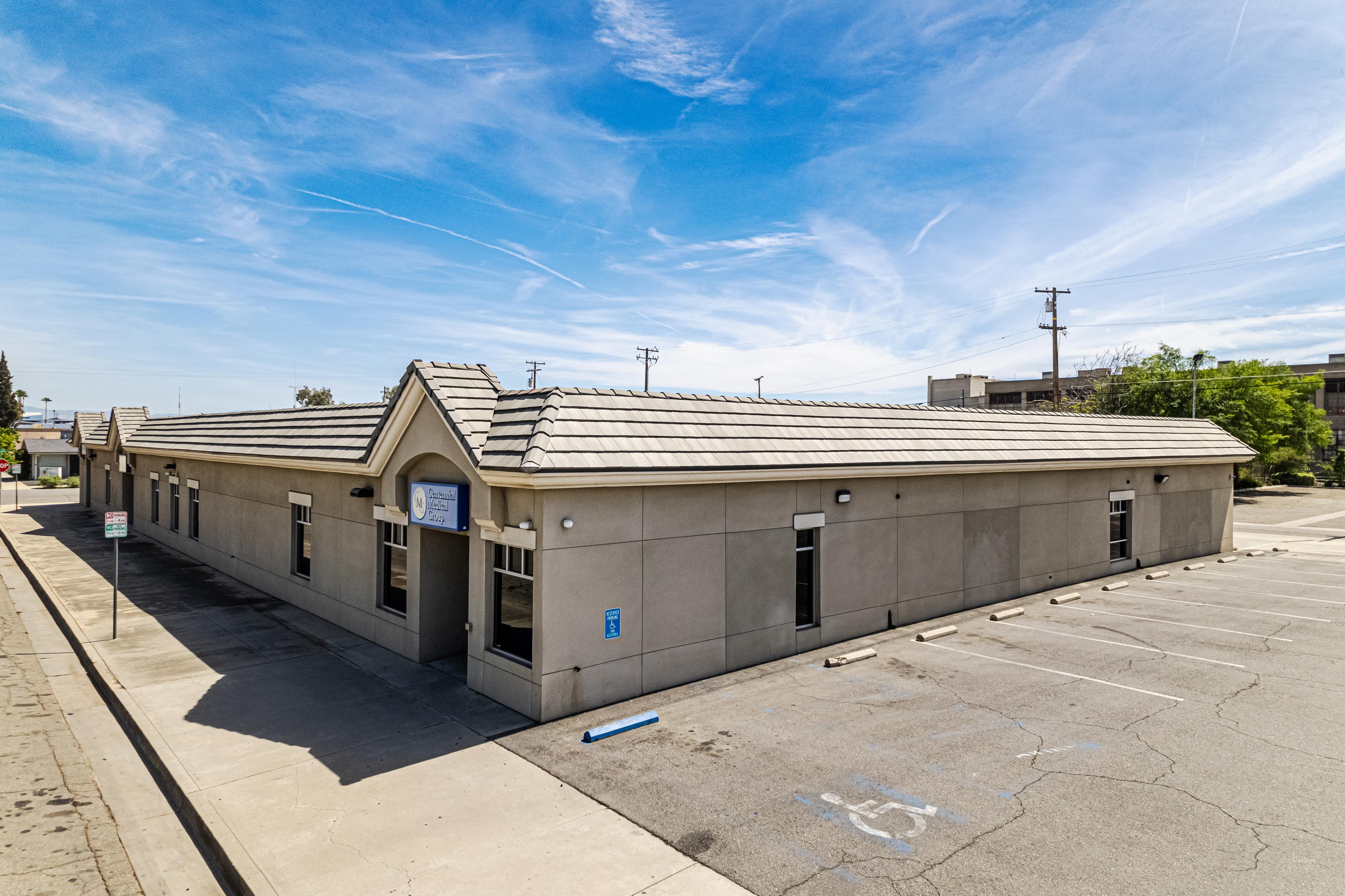
Drone Roof Inspection
Aerial and infrared drone roof inspections across Jackson, MS map trapped moisture on large low-slope roofs with no